Press Room

News / Apr 28, 2021

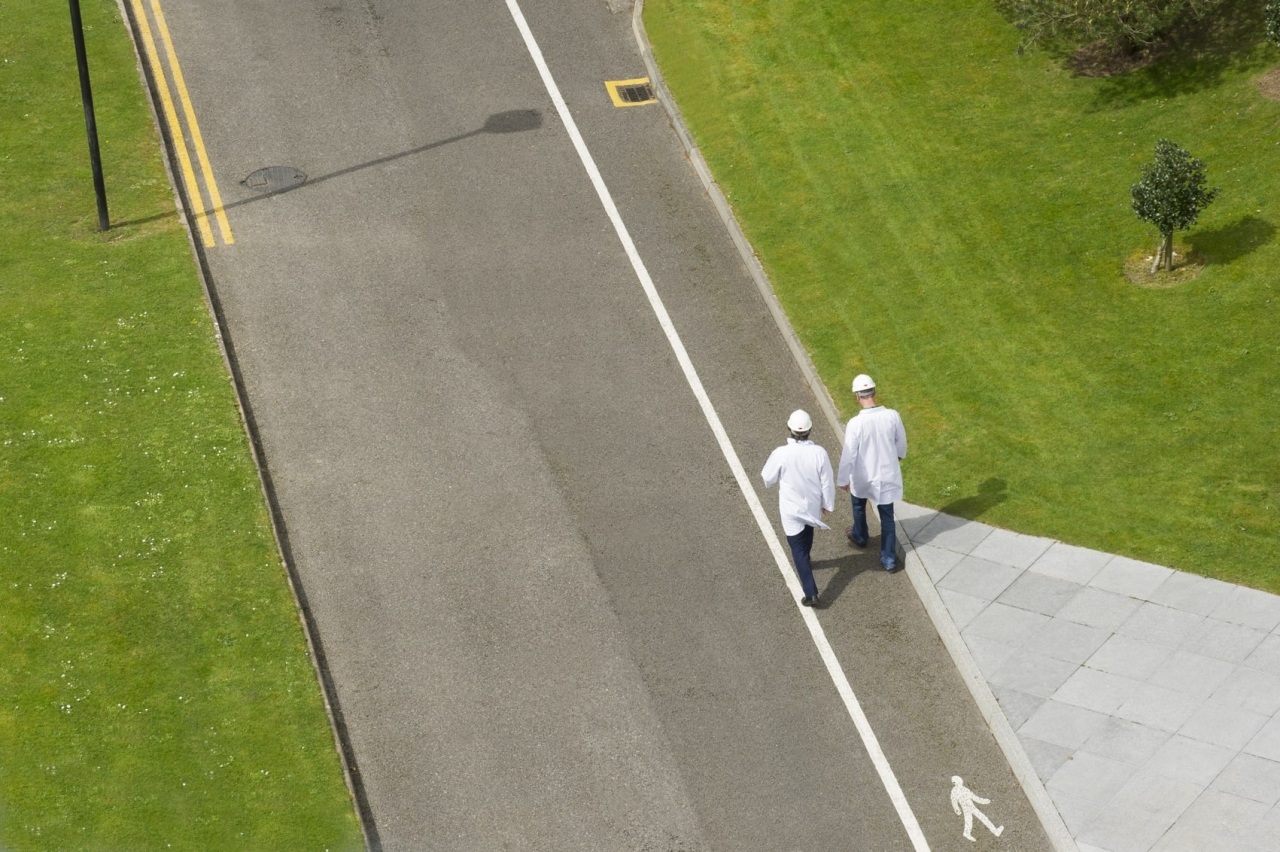
World Day for Safety and Health at Work

Safety First, Quality Always

World Day for Safety and Health at Work | Hovione

On April 28th, we raise awareness for the World Day for Safety and Health at Work.

Safety is key for us at Hovione, and each day, procedures and activities are carried out to ensure a safe working environment all over the world.


Keeping our people, our facilities and the environment safe is a constant concern and a key strategy for our development.

We are committed to managing our activities in accordance with health, safety and environmental protection standards.

With the Covid-19 outbreak, we involved all team members in a global effort towards a common goal: to prevent the spread of the virus and to inform team members on health and safety measures at work.

We have a mission: to provide safe and healthy workplaces to all.


Also in the Press Room

See All

Key Takeaways Multiple departments, including engineering and quality assurance, are responsible for evaluating GMP equipment and facilities. Regulatory inspectors require well-organized, preferably digital, maintenance documentation during GMP audits. A computerized maintenance management system (CMMS) is crucial for tracking maintenance activities and ensuring high performance. Common mistakes include neglecting criticality assessments, relying solely on time-based maintenance, and failing to consider maintainability during design. Adequate commissioning time is crucial for equipment lifespan and maintenance reliability. Construction and maintenance of manufacturing buildings and equipment fall under good manufacturing practices (GMPs) regulations (1–5). Pharmaceutical manufacturers can comply with these rules in the form of risk-based maintenance programs. Pharmaceutical Technology® spoke with David Basile, VP Technical Operations, Americas, Hovione, about how companies can meet these requirements for GMP facilities and equipment and some of the common mistakes made when working toward compliance. PharmTech: Which department is responsible for evaluating GMP equipment and facilities? Basile (Hovione): The primary groups that participate in the evaluation of GMP equipment and facilities are engineering, maintenance, while quality assurance (QA) oversees compliance and approval. The best companies keep a few dedicated roles focused on maintenance planning and equipment reliability to drive best practices and implement the concepts of reliability centered maintenance. Do regulatory inspectors request proof of maintenance? If yes, how should this be compiled and presented to the agency? Yes, it's fairly standard for regulators to request proof of maintenance during GMP audits to verify compliance and confirm that we document all our activities related to the manufacturer and release of our products. You didn't do it, if you didn't document it. We compile detailed electronic records, including preventive maintenance schedules and calibration certificates. These should be presented in a clear and organized manner. In our recent inspections, we've seen that inspectors appreciate being able to get these records in a digital format for portability, and in case they'd like to reference them at their convenience. Another element here is using what we call our computerized maintenance management system, or CMMS. This is a central repository for all of our maintenance-related activities. This is a key system in the efficient execution of any strong, compliant maintenance program. It provides detailed work order history, preventative maintenance instructions, asset specifications, scheduling, data and spare parts inventory, so we can see trends and pick up drift, for example, to clearly demonstrate that our assets remain in a state of high performance and quality operation. We'd really be flying blind without a CMMS. It's a tool that you can't live without in today's world of pharmaceutical maintenance. What are the most common mistakes that manufacturers make when it comes to maintaining GMP equipment and facilities? Failing to do a comprehensive criticality assessment and a risk-based approach, [which can result] in over or under maintenance [is one mistake]. Solely relying on time-based preventative maintenance versus proactive maintenance approaches such as precision alignment or lubrication [is another]. Today's teams need to incorporate conditions-based maintenance using technologies such as vibration analysis. They can no longer just fix things that break. They need to diagnose equipment, looking for early signs of failure before they fully develop. Other examples of this are ultrasound or infrared scanning to ensure motors and electrical systems are wired and operating properly. Another mistake might be failing to consider design for maintainability during upgrades and not during the design phase. Adequate space and access to equipment, standardized tools, having the right pickups on equipment for condition-based maintenance [are important considerations]. I can't tell you how many times I've seen a filter housing or an instrument placed in the interstitial space above a ceiling with no way to safely access it. Failing to consider design for maintainability and not bringing maintenance in during the design phase is one mistake that people often make. Not carving out a role for a dedicated maintenance planner is also a misstep. At Hovione, we have a dedicated reliability engineer and maintenance planner that help in the evaluation. This is critical to shorten the mean time to repair and ensure that all tools and supplies needed for the job are available and kitted to support fast first-time-right work order execution. These roles are game changers to the operation and take you from walking to sprinting, especially when candidates bring hands on experience. In fact, the best planners are usually seasoned mechanics. One final failure we see often is not building in enough time for commissioning. The lifespan of equipment can be greatly influenced during the commissioning phase. This is where maintenance reliability starts. Too often, commissioning is rushed through, and equipment and preventive maintenance plans and required spare parts are not thoroughly assessed. In many cases, due to limited time, the CMMS system is not fully populated with key information to perform comprehensive root cause analysis. Read the full article at Pharmtech.com  

Article

Missteps in GMP Facilities and Equipment Maintenance

Dec 26, 2025

A mechanical engineering graduate, this Frenchman is the CEO of the Portuguese pharmaceutical contract manufacturer Hovione. Still owned by the founding family, the company was awarded the 2025 ‘Léonardo de Vinci’ Prize, which recognizes the innovative and successful succession planning of family businesses. With an international career behind him, Jean-Luc Herbeaux is almost more fluent in English than in his native language. At 58, this Frenchman with iceberg-blue eyes is the CEO of Hovione. Founded in the late 1950s, this Portuguese group, with 100% family ownership, has just received the ‘Léonardo de Vinci’ Prize, which highlights entrepreneurial successes tinged with family legacy. While this mid-sized company with a turnover of €500 million maintains a low profile, its pharmaceutical contract manufacturing business is just as obscure to the general public. "Yet, the market for contract manufacturers, or 'contract development manufacturing organizations,' is worth $200 billion", emphasizes the CEO, who has been working in this microcosm for two decades. 500 patents Aware of the stakes, he does not deny "the pharma industry's dependence on Indian and Chinese capabilities". "The fact remains that the trend is toward the regionalization of supply chains, with European manufacturers producing for the Old Continent, American manufacturers for their own market, and so on", he says. And to highlight the foresight of Diane and Ivan Villax, the founding couple, "who thought globally from the very beginning". As a result, the group, with its 500 patents, has factories in China, the United States, and Ireland, without neglecting its home territory. This is evident by the site currently under construction on the banks of the Tagus River, following a €200 million investment. "The heavy engineering and compliance aspects are being finalized, "he explains, emphasizing that this highly regulated sector "is under a microscope". He knows this all too well, as Hovione claims to be involved in 5 to 10% of the drugs approved each year by the FDA, the American drug regulatory agency. Professor from Houston to Japan “In this small world, having a good image is important: this is the case with Jean-Luc, passionate about his work, but who knows how to demystify things”, observes Elie Vannier, former chairman of the board of Hovione. He adds that having an international profile is a strength “in this ecosystem where talent and clients are international”. For his part, Jean-Luc retains from his numerous flights “a taste for films of all genres and from all countries”. The son of an administrative employee in secondary schools and an auto insurance expert, the youngest of three children moved around according to his parents' job transfers. He was born in Meaux, grew up in Chartres, and attended the University of Technology of Compiègne, “which already offered programs abroad”. Thus, he left a mechanical engineering internship at a Dior perfume factory to join the University of Houston in Texas, "carrying a 20 kg backpack". Despite his then-limited command of English, he earned a doctorate, became a professor, and met an American woman who would become his wife and the mother of their two children. Next came the University of Kanazawa in Japan. Alas! Disappointed by the academic world, "where you have to fight to get resources", he succumbed to the allure of industry and joined the American chemical company Rohm and Haas, which had fallen under the control of the German company Evonik. 80 million patients He spent twenty years there, in Germany and Singapore, before "accepting the offers from headhunters". He then accepted Hovione's offer, who appointed him Chief Operating Officer in 2020, then CEO two years later, making him the first CEO not from the founding family. The family remains the sole shareholder, which earned the company the ‘Léonardo de Vinci’ Prize, created by the Association Les Hénokiens and the Clos Lucé. Having settled near Lisbon, he substituted walking for combat sports, "having been burned by the injuries of some friends". He also mentioned that Hovione, whose clients include 19 of the world's 20 largest pharmaceutical companies, helps treat more than 80 million patients.   (Translated version)   Read the original and full article in French on LesEchos.fr  

Article

Jean-Luc Herbeaux aims to boost the growth of the pharmaceutical group Hovione

Dec 02, 2025