Press Room

News / May 06, 2021

Science Turnaround - Case Studies

Case Studies presented by our scientists: how alternative scenarios accelerated progress and improved results allowing our clients’ products to perform better.

Science Turnaround - Case Studies | Hovione

Welcome to the new “Science Turnaround” Series

Our multinational team partners with global customers to help deliver lifesaving and life changing medicines for patients all over the world. Most of the projects we are involved in are complex and challenge us to innovate in order to allow our clients’ products to perform better. 

In this new compilation of Case Studies presented by our scientists, we share how Hovione’s multi-disciplinary teams’ expertise, scientific rigor and out-of-the-box thinking allowed us to see alternative scenarios, accelerating progress and improving results.


Click on the image to play the video

Case Study - Enabling lean manufacturing with Process Analytical Technologies (PAT) | Hovione


Case Study #6 - “Enabling lean manufacturing with Process Analytical Technologies (PAT)"

In this case study, Ricardo Sousa explains how a 20h bottleneck was eliminated by replacing a loss on drying method with NIR, decreasing the stocking time to 5 hours.

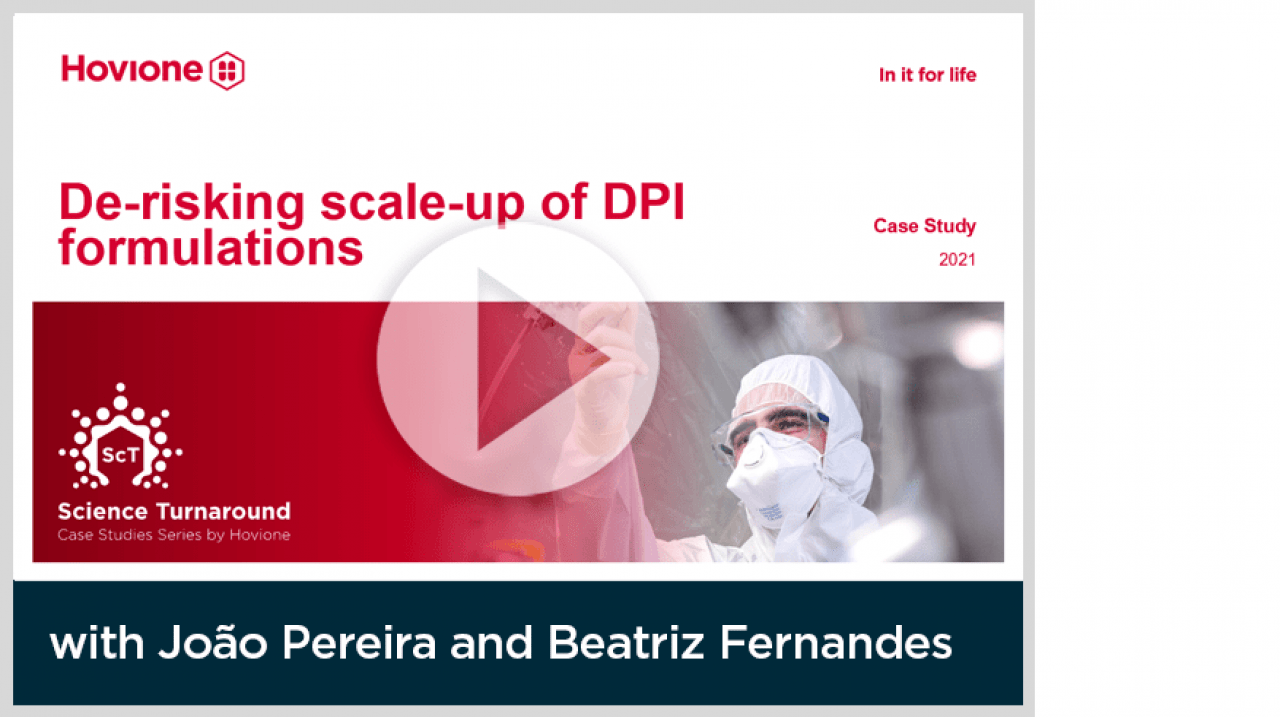
Case Study - De-risking scale-up of DPI formulations | Hovione


Case Study #5 - “De-risking scale-up of DPI formulations”

In this case study, João Pereira and Beatriz Fernandes explain how to approach the scale-up of DPI formulations from lab to commercial scale by maintaining scale-independent blending parameters and the capsule filling mechanism, avoiding impact on processability and final product performance. 

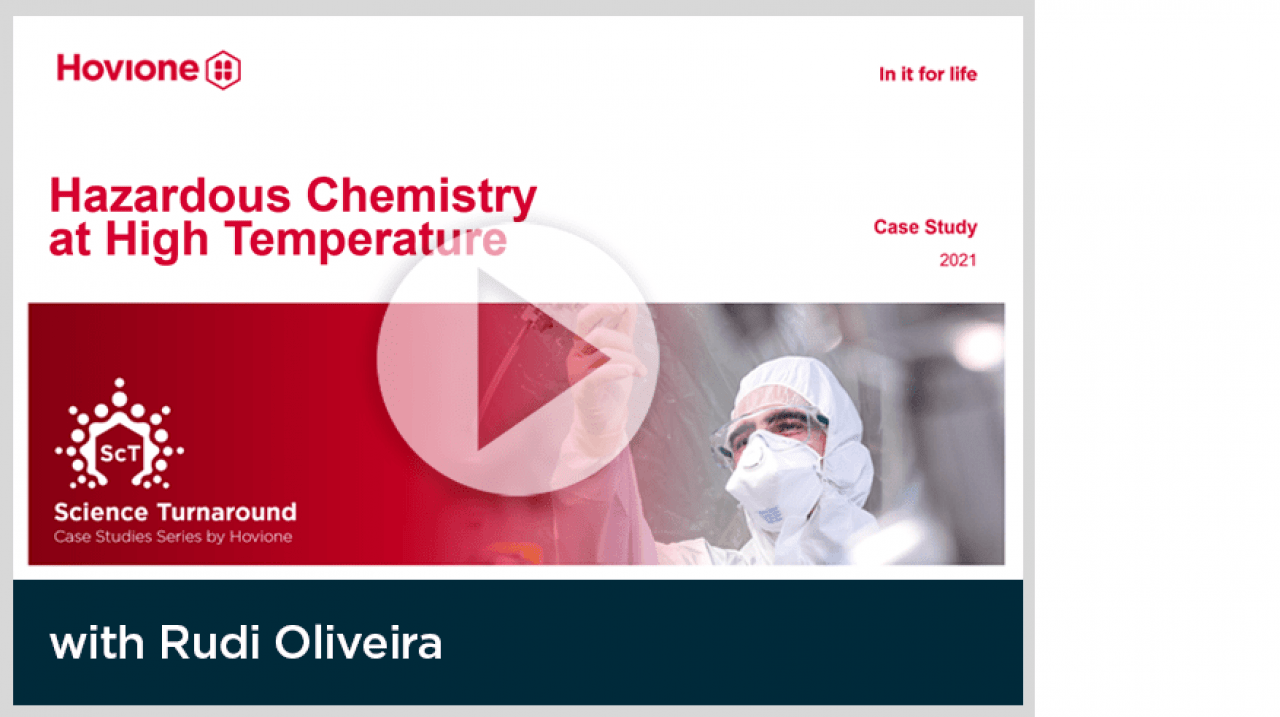
Case Study - Hazardous Chemistry at High Temperature | Hovione


Case Study #4 - “Hazardous Chemistry at High Temperature”

In this case study, Rudi Oliveira explains how a hazardous chemical process was approached and how continuous flow was applied to achieve a safer and more efficient process at scale.

Case Study - Understanding crystallization | Hovione


Case Study #3 - "Understanding crystallization"

In this case study, Filipe Vultos and Liliana Silva explain the approach taken to study the physical stability of a multicomponent amorphous solid dispersion formulation with the aim of achieving a better understanding of the crystallization events occurring during stability studies.

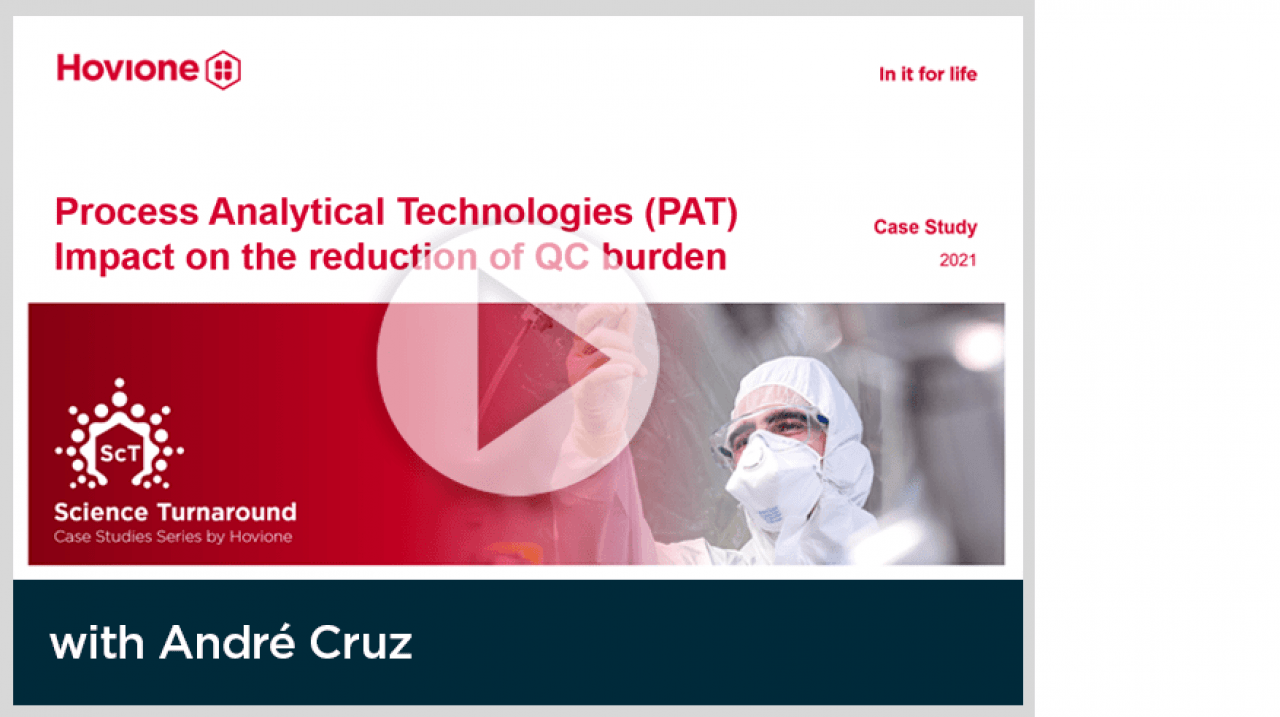
Case Study - Reduction of QC burden | Hovione


Case Study #2 - "Reduction of QC burden"

In this case study, André Cruz explains how an analytical bottleneck, that resulted from a combination of a time-consuming analytical technique with a process that involved high throughput of samples, was approached and how Chemometrics allied with Near infrared (NIR) spectroscopy were applied to achieve a faster analytical response that potentiate the increase of productivity for both QC and Production areas.

Case Study - In water we go | Hovione


Case Study #1 - “In water we go”

In the first case study, Susana Lucas explains how a multistep chemical process was approached toward a new synthetic route to achieve an efficient and highly sustainable one-pot scalable process.


Wondering if your projects can achieve better results this year?


Contact our experts today


Also in the Press Room

See All

In an interview with Executiva, a portuguese media outlet focused on women´s leadership, Diane Villax, co-founder and long-standing leader of Hovione, reflects on her journey and the company’s development over more than six decades. Diane Villax’s career began at a time when few women worked outside the home. At 19, she joined a trading company as a foreign languages correspondent, where she developed essential business skills — including commercial correspondence, banking and export procedures — that later proved instrumental in helping her husband, Ivan Villax, establish Hovione in 1959. From its earliest days operating in the family home in Lisbon, Hovione adopted an international outlook. The company’s first major customers were in Japan, setting demanding quality standards that helped shape its long-term position in global markets. Over the following decades, Hovione expanded its footprint with the construction of its first manufacturing site in Loures (1969), followed by expansion to Macau (1986), the United States (New Jersey, early 2000s) and Ireland (Cork). The company grew into a global organization with more than 2,500 employees — including over 300 scientists — and a reputation as a preferred supplier to leading pharmaceutical companies worldwide. Throughout the interview, Diane highlights the values that have guided the company’s development: a commitment to excellence, a strong work ethic, and a focus on quality and long-term relationships. Although she did not have formal business training, she learned “on the job” and brought discipline, precision and structure to her role — particularly in the company’s early financial and administrative leadership. Now in her nineties and an active member of Hovione’s Board of Directors, Diane Villax remains engaged with the company’s evolution and governance, reflecting a continued commitment to its long-term development. Her story reflects entrepreneurial drive, resilience and long-term leadership — and offers insight into the values that have shaped Hovione’s trajectory for more than six decades. Read the full interview at Executiva.pt (in portuguese).    

Article

Hovione’s Diane Villax: “I was not brought up to be a business woman”

Feb 23, 2026

Márcio Temtem, vice president, Strategic Business Management, Hovione, addresses molecule complexity, speed, and regionalization via integrated manufacturing. The landscape of small molecule manufacturing is rapidly evolving, according to Márcio Temtem, vice president, Strategic Business Development, Hovione, who provides an expert look into how his firm is evolving their approach as the industry changes. With 17 years of experience at Hovione, a family-owned CDMO with a 66-year legacy, Temtem identifies three pivotal trends currently shaping the industry: increased complexity, accelerated development speed, and the regionalization of supply chains. Temtem observes that small molecules have grown significantly in size and complexity, often requiring multiple chemical steps and high-potency handling. This shift necessitates a specialized "toolbox" to overcome modern bioavailability challenges. Highlighting Hovione's technical approach to these hurdles, Temtem states, "We use a platform called amorphous solid dispersions, produced by spray drying to address this challenge of bioavailability.” This platform represents a core area in which Hovione maintains global leadership, utilizing innovative tools to scale processes efficiently while minimizing the use of APIs. Temtem also mentions the increased influence of AI in drug discovery and deployment, which requires CDMOs to bridge the gap from grams to tons at a much faster pace than in previous years. He further addresses the trend of regionalization, noting the rise of countries such as the US and China prioritizing regional supply chain strategies. He explains that Hovione is uniquely positioned to navigate these new challenges with supply chains through its FDA-inspected sites across three continents. Central to Hovione’s competitive advantage is their integrated manufacturing offer, which combines drug substance and drug product expertise at a single location. Temtem emphasizes the value of this model, stating, “The company… has been investing in an integrated offer, bridging the problems of chemists and formulators all at the same shop.” To support this integration, the company continues to pioneer advanced manufacturing avenues, including continuous flow for drug substances and continuous tableting for drug products. Watch the full video interview or read the transcript at PharmTech.com  

Article

Hovione’s Strategy for Complexity, Speed, and Regional Supply Chains

Feb 06, 2026